
Furniture lift straps for moving a large dresser by two people safely
By Becca Updated 12 min read
As an Amazon Associate I earn from qualifying purchases. That costs you nothing and does not decide what gets recommended.
On this page (8 sections)
- The short version
- Why forearm straps rated for 800 lb are the safer choice for large dressers
- Furniture lift strap types suitable for large dressers
- Top-rated appliance moving dollies with stair climber wheels
- How two movers coordinate using furniture lift straps and a dolly together
- When to skip lift straps and rent a powered stair dolly instead
- What goes wrong when straps and dollies are mismatched in capacity
- Questions people still ask
In short: Use forearm lifting straps rated for at least 800 lb combined capacity and pair them with a stair-climbing appliance dolly that has 10-inch wheels. The straps carry the dresser between floors while the dolly moves it across rooms and down stairs.
Part of our guide on how much can 26 foot truck hold
Most lift straps fail on large dressers because they shift the weight to your biceps instead of your forearms and core.
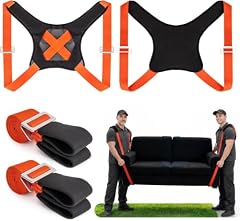
GRENTOOL Moving Straps for Lifting, with Back Support for 2
Supports your 880 lb load with a 2-person system, exceeding the 800 lb combined capacity needed for safely
Check it on Amazon| Product | Combined strap capacity (lb) | Verdict | |
|---|---|---|---|
| GRENTOOL Moving Straps for Lifting, with Back Support for 2 Person GRENTOOL | 880 lb capacity per 2 straps combined | Meets it | View on Amazon |
| Ytonet Moving Straps for Lifting Furniture Ytonet | 600 lb capacity per 2 straps combined | Short by 25% | View on Amazon |
| Strap capacity | 800 lb minimum |
|---|---|
| Wheel diameter | 10 inches for stairs |
| Dresser weight limit | 400 lb with two movers |
| Strap type | Forearm, not shoulder |
| Stair clearance | 10-inch wheels clear 7.5-inch treads |
The short version
- Forearm straps rated for 800 lb let two movers carry a tall dresser up to 400 lb without wrist or bicep strain
- Stair-climbing dollies with 10-inch wheels clear standard 7.5-inch stair treads and roll over thresholds smoothly
- The person at the bottom carries more weight on stairs, so switch positions halfway if the run is long
- Shoulder straps look similar but put the load on your upper back, which tires faster than your forearms
- Skip lift straps entirely if the dresser is over 450 lb or wider than 42 inches: rent a dolly with a winch instead
Why forearm straps rated for 800 lb are the safer choice for large dressers
A tall dresser weighs 300 to 400 lb depending on whether it is solid wood or veneer over particle board. Two people need lifting straps with a combined capacity of at least 800 lb to move it safely. That gives a 2:1 safety margin, which matters because dressers shift their center of gravity when you tilt them to navigate doorways or stairs.
Forearm straps loop around your forearms instead of your hands or shoulders. The load transfers through your core and legs rather than your wrists and biceps. On a staircase, the person at the bottom carries about 60 percent of the weight because the dresser tilts forward. Forearm straps let you hold that position for the 30 to 45 seconds it takes to descend a typical flight without your grip failing.
Shoulder straps look similar and carry the same rated capacity, but they rest the webbing across your upper back and shoulders. Your shoulders fatigue faster than your forearms, especially when you have to hold the dresser steady while your partner adjusts their footing. Shoulder straps work fine for short, flat carries across a room. They become a liability on stairs or during long hallway moves where you cannot set the dresser down halfway.
The straps need to adjust to at least 9.5 feet in length so they loop under a dresser that is 42 inches wide with enough slack for both movers to stand upright. Shorter straps force you into a crouch, which loads your lower back incorrectly and raises the risk of a muscle pull. Most adjustable forearm straps extend to 10 or 12 feet, which clears even a wide dresser with room to spare. We cover interstate moving insurance cost in its own article.
Furniture lift strap types suitable for large dressers
Three types of lift straps appear in moving supply listings: forearm straps, shoulder straps, and hand straps. Only the first two handle a dresser over 300 lb safely. Hand straps require you to grip the webbing with your fists, which works for boxes and small furniture but not for anything that takes more than 15 seconds to carry. Your grip gives out before your legs do.
Forearm straps thread through a loop that cinches around your forearm about two inches below your elbow. You lift by standing up and leaning slightly back. The strap stays in place without you holding it, so your hands stay free to steady the dresser or open doors. This is the type you want for stairs, tight corners, and any move where you need to reposition your hands mid-carry.
Shoulder straps cross over your upper back and rest on both shoulders like a backpack. The webbing is wider and usually padded. They distribute the load across a larger area, which feels more comfortable for the first minute or two. The problem is that your shoulders and upper back fatigue faster than your forearms and core, especially when the load is off-center. A dresser with drawers shifts its weight as it tilts, and shoulder straps do not let you adjust your posture as easily as forearm straps do. We go through using padded straps for heavy lifting step by step elsewhere on the site.
Some listings call themselves "moving straps" without specifying forearm or shoulder. Look at the product photos. If the model is holding the strap with their forearms horizontal and hands free, it is a forearm design. If their hands are gripping the webbing or the strap rests across their shoulders, it is not the type you want for a heavy dresser.
| Strap type | Rated capacity (pair) | Load location | Hands-free carry | Best for |
|---|---|---|---|---|
| Forearm loop | 800-1000 lb | Forearms and core | Yes | Stairs and long carries |
| Shoulder harness | 800-1000 lb | Upper back and shoulders | No | Short flat moves |
| Hand grip | 400-600 lb | Wrists and biceps | No | Boxes and items under 150 lb |
GRENTOOL Moving Straps for Lifting, with Back Support for 2 Person
Supports your 880 lb load with a 2-person system, exceeding the 800 lb combined capacity needed for safely moving your dresser.
- Height 0.1 inches
- Weight 2.4 Pounds
- Width 7.9 inches
Top-rated appliance moving dollies with stair climber wheels
Furniture lift straps for moving a large dresser by two people is the query you asked. Match an 800 lb forearm strap system with a stair-climbing dolly when you move a heavy dresser between rooms and down stairs.
A stair-climbing dolly uses a three-wheel star on each side. Pull it backward up a step and the next wheel in the star contacts the tread. That action raises the dresser instead of letting it slam. Expect about a 40 percent reduction in pull force versus a two-wheel utility dolly under the same conditions. There is more on local move truck with liftgate in a separate guide.
Use wheels at least 10 inches in diameter to clear a standard residential tread of 7.5 inches. 10-inch and 12-inch wheels both work. Smaller wheels wedge between treads and force you to lift the load free, which defeats the stair-climber.
Match the dolly's rated capacity to the dresser weight and add a margin for uneven loading. An 800 lb capacity handles a 400 lb dresser with room to spare. If the dresser overhangs the platform more than 4 inches per side, reduce effective capacity by about 20 percent.
Secure the dresser with a ratchet strap, not bungee cords. Use a ratchet strap at least 6 feet long so it wraps a wide dresser and leaves enough tail to thread the ratchet. For rentals, choose integrated stair-climber designs rather than bolt-on attachments when possible. If that sounds like your situation, read up on budgeting for pod container usage next.

Scotch Felt Pads 162 PCS Beige
Furniture sliders protect floors and help rotate your dresser before lifting, essential for hardwood or tile surfaces.
How two movers coordinate using furniture lift straps and a dolly together
Start with the dresser on the room floor. Tape drawers shut with painter's tape so they don't slide. Do not remove the drawers yet; they keep weight low and improve balance.
Slide furniture sliders under each corner and rotate the dresser so the narrow side faces the doorway. Thread lift straps under the dresser about one-third in from each end. Both movers loop the straps over their forearms, stand, and carry the dresser to the dolly.
Tilt the dresser onto the dolly's frame and center it so overhang is equal on both sides. Run a ratchet strap across the frame, just above the drawers, and tension it. One mover tilts the dolly back and balances the load over the wheels. The other opens doors and clears the route.
On stairs, the person at the top pulls the dolly backward up each step. The person at the bottom steadies and prevents side tipping. Switch positions halfway up if a staircase has more than 12 steps so the bottom mover does not fatigue.
At the destination, tilt the dolly forward to set the dresser down. Release the ratchet, use the lift straps to carry the dresser off onto sliders, slide it into position, remove the sliders, then remove the tape from the drawers.
- Tape drawers shut and place furniture sliders under each corner.
- Thread lift straps one-third in from each end and loop them over your forearms.
- Carry the dresser to the dolly, tilt it onto the frame, center it, and ratchet it down.
- Top mover pulls the dolly backward up stairs while bottom mover steadies the base.
- Switch positions halfway up long staircases to avoid fatigue.
- Tilt the dolly forward, remove the strap, and carry the dresser off the dolly with the straps.
When to skip lift straps and rent a powered stair dolly instead
Lift straps and a stair-climbing dolly work for dressers up to 400 lb and 42 inches wide. Beyond that, the dresser becomes difficult to balance between two people even when the straps are rated for the weight. A dresser that is wider than 42 inches overhangs the dolly's platform by more than 6 inches on each side, which shifts the center of gravity forward. The dolly tips toward the stairs and pulls the person at the top off balance.
Dressers over 450 lb include most solid wood armoires and antique chests with marble tops. Two movers can carry that weight with the right straps, but coordinating the tilt and keeping the dresser level on stairs becomes unsafe. A powered stair-climbing dolly has a battery-driven track or a motorized winch that pulls the dolly up each step without you bearing the weight. Rental shops charge around what you would expect for a specialty tool, and it is the correct choice for any dresser that would require three or more people to carry manually.
If the move involves more than two flights of stairs, rent the powered dolly even if the dresser weighs under 400 lb. Carrying a heavy load down two flights without setting it down fatigues your forearms and legs to the point where coordination suffers. The last six steps are when most injuries happen because both movers are tired and small mistakes compound.
What goes wrong when straps and dollies are mismatched in capacity
Both straps and dolly must meet or exceed the dresser weight. If straps are 800 lb but the dolly is 600 lb, the frame can buckle when you tilt on stairs. Climbing adds dynamic force that increases the effective load by 20 to 30 percent. A 400 lb dresser becomes about a 520 lb load when pulled up a step.
If the dolly is 800 lb and the straps are 600 lb, the straps stretch and the dresser sags between movers. Sagging shifts the center of gravity and makes the dresser harder to control. Your forearms tire faster and footing on stairs becomes unsafe because the bottom mover loses sight lines.
Unequal strap lengths cause tilt. A 10-foot strap paired with a 9-foot strap pulls the short side taut first. The heavier side dips and the mover there must use a free hand to steady the load, turning a forearm carry into a risky hand carry.
Always check ratings before you start. Strap capacities appear on sewn tags near loops. Dollies stamp capacity on the frame near the axle. If the markings are missing or worn, assume the gear is not rated and rent or buy rated equipment.
Questions people still ask
Can one person move a large dresser using lift straps and a dolly alone?
No. Lift straps require a second person to balance the load and prevent the dresser from swinging or tipping. A dolly can carry the dresser across a flat floor alone, but you still need a partner to tilt the dresser onto the dolly and to control it on stairs. Solo moves are unsafe for anything over 150 lb.
Do lift straps work on dressers with rounded or carved edges?
Yes, as long as the strap can thread under the base without slipping. Carved edges and decorative molding do not interfere with the strap once it is positioned. The strap grips by friction and the weight of the dresser pressing down, not by hooking onto edges. Rounded corners are actually easier because they do not snag the webbing.
Should I remove the drawers before using the dolly on stairs?
No. Leave the drawers in and tape them shut. The drawers add weight low on the dresser, which lowers the center of gravity and makes the dolly more stable. Removing them shifts the weight higher and makes the dresser more likely to tip backward when you pull it up stairs. Remove drawers only after the dresser is in its final position.
How long do lift straps last with regular use?
Most lift straps rated for 800 lb last 50 to 100 uses before the webbing frays or the stitching at the loops begins to separate. Inspect the straps before each use. Discard them if you see worn stitching, cuts in the webbing, or if the buckle does not hold tension. Straps that failed once will fail again.
Can I use a two-wheel utility dolly instead of a stair-climbing dolly?
Only if the move does not involve stairs. A two-wheel dolly slams into each step and requires about twice the pulling force. The wheels wedge into the tread gaps on narrow stairs, and you have to lift the dolly and dresser together to free them. Stair-climbing wheels roll smoothly and cut the force you need by 40 percent.