
How to put on and use lifting straps safely when moving heavy items
By Becca Updated 7 min read
As an Amazon Associate I earn from qualifying purchases. That costs you nothing and does not decide what gets recommended.
On this page (8 sections)
- The short version
- What you need before using lifting straps
- How to wear lifting straps properly
- How to secure lifting straps for moving heavy items
- Step-by-step: how to use lifting straps moving heavy items
- Tips to avoid injury when using lifting straps
- Common mistakes when using moving straps
- Questions people still ask
In short: Wear lifting straps by positioning them under your arms and around your back, then secure the item to lift with your legs, not your back. Use the straps’ loops to share load and keep a firm grip during moving.
Part of our guide on two-person lifting straps guide
This guide shows exactly how to wear, secure, and use lifting straps to move heavy items safely and avoid common injuries.
| Load capacity | up to 600 lbs |
|---|---|
| Strap length | usually 5-7 feet |
| Strap width | 2-3 inches |
| Common injury | back strain |
| Lift angle | close to body |
The short version
- Secure straps tightly around the object before lifting
- Wear straps under armpits and support the back
- Lift with knees, not back, to avoid injury
- Avoid twisting while carrying items with straps
- Check straps for damage before every move
What you need before using lifting straps
To use lifting straps safely when moving, prepare the right gear first.
Essential items include a pair of strong lifting straps rated for at least 600 pounds per pair, sturdy gloves for grip, and comfortable, closed-toe shoes to protect your feet.
Make sure the straps are made from durable materials like nylon webbing and have reinforced stitching.
Avoid cheap or worn straps; inspect for frays or tears before every use. If that sounds like your situation, read up on moving gloves with grip men size small next.
Choose lifting straps with a comfortable width, typically 2 to 3 inches. Narrower straps can dig into your skin, causing discomfort during long moves, while wider straps distribute weight more evenly.
Consider adjustable straps with padded sections. Padding reduces pressure on your shoulders and armpits, making it easier to carry heavy loads for longer periods without pain.
Keep a first-aid kit nearby when moving heavy items. Even with proper equipment, accidents happen. Having basic supplies helps you manage minor injuries immediately, avoiding complications. For the detail, see our notes on using lifting straps refrigerator.
- Lifting straps: nylon, rated 600+ lbs
- Protective gloves: non-slip grip
- Closed-toe shoes: solid sole
- Inspection checklist: no frays, tears, or damage
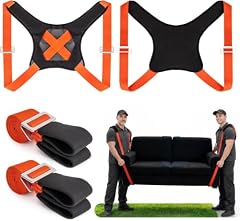
GRENTOOL Moving Straps for Lifting, with Back Support for 2 Person
Handles your lifting needs with a heavy-duty 880 lbs capacity strap, exceeding 600 lbs requirement
How to wear lifting straps properly
Position the lifting straps so that they pass under your arms and run diagonally across your back.
Insert your arms through the loops of the straps, ensuring the padded or wider part rests under your armpits for even load distribution.
Keep the straps snug but not tight; you should have freedom to bend your knees comfortably.
The straps function as a transfer of load from arms to shoulders and back, reducing strain on your hands and arms.
If you have a long torso or broad shoulders, adjust the strap length to ensure the straps don't ride up or slip off during the lift. Straps that shift can cause imbalance and increase injury risk.
Check that the 'X' shape on your back is centered. Off-center straps reduce support and can cause uneven weight distribution, tiring one side more quickly.
Wear a fitted shirt that won't bunch under the straps. Loose clothing can interfere with strap placement, causing slipping or discomfort.
- Hold one loop in each hand and position straps behind your back.
- Slip your arms through the loops, under your armpits.
- Adjust straps so padding rests comfortably under armpits.
- Check that straps cross at the back, forming an 'X' shape.
- Ensure freedom of movement and secure fit before lifting.
How to secure lifting straps for moving heavy items
Wrap the straps around the object you intend to move and thread the ends through each other to form a tight hold.
Make sure the straps are positioned to support the heaviest parts of the item, such as sofa arms or appliance corners.
Avoid placing straps over fragile or sharp edges without padding.
Double-check the strap tension: it should be tight enough to prevent slipping but not so tight it damages the object.
For irregularly shaped items, use additional padding or blankets under the straps to protect both the object and the straps. This prevents damage and keeps straps from wearing out prematurely.
Test the security of the straps by lifting the item slightly off the ground before fully committing. If the load shifts or the straps loosen, readjust before moving.
If the item has handles, loop straps through them if possible. Handles provide natural anchor points, improving grip and control.
- Place the object on a flat, stable surface.
- Wrap the lifting straps around the object’s base or handles.
- Cross the straps and thread ends through the loops or buckles.
- Pull firmly to tension the straps and secure the object.
- Inspect that the straps do not shift or loosen when pulled.
Step-by-step: how to use lifting straps moving heavy items
Use the lifting straps to share the load between movers and keep your backs straight during the lift.
Bend your knees and keep your feet shoulder-width apart to maintain balance.
Communicate clearly with your partner to lift simultaneously and avoid sudden movements.
Keep the item close to your body and move slowly to prevent strain or injury.
Start each move by taking a short test step together. This helps confirm balance and coordination before committing to a longer carry.
Count to three aloud before lifting. Synchronizing your lift reduces surprises and uneven force, preventing strain or dropping.
If you need to turn, pivot your feet instead of twisting your torso. Twisting under load causes back injuries and reduces control.
- Check that all straps are tight and secure on the object.
- Put on the lifting straps following the correct placement.
- Position yourself and your partner on opposite ends of the item.
- Bend knees and lift with legs while keeping backs straight.
- Walk carefully, avoiding twisting or sudden shifts.
- Set down the item by bending knees and lowering slowly.
Tips to avoid injury when using lifting straps
Always lift with your legs, not your back, to reduce the risk of strains.
Keep the item as close to your torso as possible to maintain your center of gravity.
Avoid jerky or twisting motions while carrying the load.
Take breaks if moving heavy items over a long distance or time.
Inspect the straps for damage before each use to avoid sudden failure.
Keep your core muscles engaged throughout the lift. Tightening your abdominal muscles stabilizes your spine and reduces injury risk.
Stay hydrated and avoid fatigue. Tired muscles are weaker and less coordinated, increasing the chance of accidents when using straps.
Wear clothing that allows full range of motion. Restrictive clothes can limit bending and reaching, forcing you into unsafe postures.
- Lift with knees bent, back straight
- Keep heavy item close to body
- Avoid twisting while carrying
- Inspect straps regularly for wear
- Communicate with your moving partner
Common mistakes when using moving straps
Many movers wrap straps loosely, which allows the load to shift and increases injury risk.
Wearing straps too high or too low on the body reduces their effectiveness and comfort.
Failing to use proper lifting form, like bending the back instead of knees, causes strains.
Neglecting to inspect straps before use can lead to sudden breaks or accidents.
Twisting or rushing during the move often causes falling or dropping the item.
Avoid wearing lifting straps over jewelry or watches; these can get caught and cause injury or damage.
Don’t rely solely on lifting straps for large or extremely heavy items. Use dollies or other equipment to handle the heaviest loads safely.
Never rush when fastening or adjusting straps. Slow, deliberate tightening ensures the load stays secure and balanced throughout the move.
- Loose strap tension -> tighten straps firmly
- Incorrect strap placement -> place under armpits crossing back
- Poor lifting posture -> bend knees, keep back straight
- Ignoring strap damage -> check straps before every move
- Twisting while carrying -> move slowly, keep item aligned
Questions people still ask
Can I use lifting straps alone?
Lifting straps are designed for at least two people. Using them alone reduces safety and load control, increasing injury risk.
Are lifting straps suitable for all heavy items?
They work best with bulky, awkward items like furniture and appliances but may not suit small or fragile objects without added protection.
How tight should lifting straps be secured?
Straps should be tight enough to prevent slipping but not so tight that they damage the item or restrict your movement.
What if the straps slip during the move?
Stop immediately, reposition and retighten the straps before continuing. Slipping indicates unsafe load handling.
How often should I replace lifting straps?
Replace straps if you see fraying, cuts, or damage. Regular inspection before every move is essential for safety.