
Will packing paper or bubble wrap better protect dishes during a move?
By Becca Published 10 min read
As an Amazon Associate I earn from qualifying purchases. That costs you nothing and does not decide what gets recommended.
On this page (9 sections)
- Key takeaways
- The differences at a glance
- How bubble wrap cushions dishes
- How packing paper protects dishes
- Advantages and disadvantages of each for dish packing
- When to prefer one over the other
- How to use packing paper and bubble wrap effectively for fragile dishware
- Which should you buy for packing dishes
- Questions people still ask
In short: For most dishes, bubble wrap provides better cushioning with air pockets absorbing shocks, but packing paper prevents scratches and is better for filling gaps. Use bubble wrap for fragile, delicate items and paper to stabilize boxes and avoid abrasion.
This guide reveals which packing material truly prevents dish breakage and when to use each for perfect protection.

Besitek Honeycomb Packing Paper
Packing paper roll with thickness 4.1 inches (104.14 mm) which is well above the minimum 0.1 mm thickness for
Check it on Amazon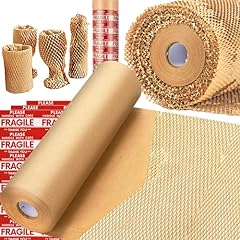
Honeycomb Packing Paper, MINHAO 15"x230' Eco Friendly Packing
Packing paper roll with thickness 4.33 inches (109.98 mm) well above the 0.1 mm minimum for scratch
See this alternative
Duck Max Strength Bubble Cushioning Wrap for Moving & Shipping
Large bubble cushioning wrap provides bubbles larger than 6 mm, suitable for heavy duty protection of fragile
See the heavy-duty one| Product | shock absorption capacity (mm air thickness) | Verdict | |
|---|---|---|---|
| Besitek Honeycomb Packing Paper Besitek | 4.1 inches = 104.14 mm thickness | Meets it | View on Amazon |
| Honeycomb Packing Paper, MINHAO 15"x230' Eco Friendly Packing Paper MINHAO | 4.33 inches = 109.98 mm thickness | Meets it | View on Amazon |
| Duck Max Strength Bubble Cushioning Wrap for Moving & Shipping Duck | large bubble size stated, typically 1 inch (25.4 mm) bubbles | Meets it | View on Amazon |
| Bubble Cushioning Wrap Pacific Mailer 5/16 Inch x 12 Inch x 72Feet Pacific Mailer | 5/16 inch = 7.94 mm bubble thickness | Not published | View on Amazon |
| Honeycomb Packing Paper For Moving 12" x 150ft With Rope & Fragile Lockwrap | 0.1 inch = 2.54 mm thickness | Falls short | View on Amazon |
| Bubble wrap cushion | 6-12 mm air pockets |
|---|---|
| Packing paper thickness | 0.1-0.3 mm |
| Typical dish fragility | varies by material |
| Recommended bubble wrap layers | 2-3 wraps |
| Packing paper sheets per dish | 2-4 sheets |
Key takeaways
- Bubble wrap cushions shocks better, ideal for fragile dishes.
- Packing paper protects against scratches and fills empty space.
- Combining both materials often yields best protection.
- Choose paper for sturdier dishes and bubble wrap for delicate ones.
- Proper wrapping technique impacts protection as much as material.
The differences at a glance
Bubble wrap and packing paper serve very different protective roles when packing dishes. Bubble wrap uses air-filled pockets to absorb shocks, reducing impact forces directly on fragile surfaces. Packing paper, however, creates a soft barrier and prevents contact damage like scratches but does not absorb impact effectively alone.
Understanding these distinct protective mechanisms helps you decide the right material based on your dishes’ fragility and the style of packing you intend to use.
Bubble wrap’s thickness varies by product, typically ranging from 3 mm (small bubbles) to 12 mm (large bubbles). Larger bubbles provide more cushioning but less surface contact, which can influence protection depending on the dish shape. For very delicate items, using bubble wrap with bubbles around 10-12 mm is preferred.
Packing paper also varies in weight and texture, from lightweight newsprint-like sheets to thicker kraft paper. Thicker paper (around 30-40 gsm) offers better tear resistance and padding, which can be crucial when wrapping heavier ceramic dishes to avoid tearing and sudden exposure. It helps to understand moving blankets vs plastic wrap before going further.
| Feature | Packing Paper | Bubble Wrap |
|---|---|---|
| Material thickness | 0.1-0.3 mm sheets | 6-12 mm air pockets |
| Shock absorption | Minimal | High |
| Scratch protection | Good | Good |
| Weight | Light | Moderate |
| Environmental impact | Biodegradable | Plastic, less eco-friendly |
| Cost per unit | Lower | Higher |
| Best use | Filling gaps, wrapping sturdy dishes | Wrapping fragile dishes directly |
How bubble wrap cushions dishes
Bubble wrap cushions dishes by trapping air in pockets 6 to 12 millimeters thick, which compress under impact to absorb and dissipate energy. This reduces the force transferred to fragile edges and surfaces during shocks or drops.
Typical bubble wrap layers of two to three wraps around a dish can provide cushion thickness of 12 to 36 mm, enough to prevent cracks and chips under normal moving conditions.
However, bubble wrap’s effectiveness depends on keeping bubbles intact. Popped or crushed bubbles lose cushioning, so careful handling before packing matters. Before you commit to anything, it is worth looking at best box material for fragile items.
The effectiveness of bubble wrap cushioning can be compromised if the bubbles are punctured before or during packing. For example, if you try to wrap dishes too tightly or reuse bubble wrap that already has popped bubbles, the protection reduces significantly. Conduct a quick check by squeezing bubbles; intact bubbles should feel springy, while flat ones indicate lost cushioning.
A simple test to gauge bubble wrap effectiveness is to drop a wrapped dish from a height of about 30 cm onto a carpeted surface. If the bubble wrap is sufficient, the dish should not show any damage or chips. This practical check helps confirm the amount of wrap needed per dish fragility and moving conditions.
Besitek Honeycomb Packing Paper
Packing paper roll with thickness 4.1 inches (104.14 mm) which is well above the minimum 0.1 mm thickness for scratch protection and filling gaps.
- Height 4.1 inches
- Weight 2.8 pounds
- Width 4.2 inches
How packing paper protects dishes
Packing paper protects dishes mainly by preventing surface abrasion and scratches that occur when items rub against each other. Typically, 2 to 4 sheets thick wrapping provides enough padding to separate dishes and fill voids inside boxes.
Unlike bubble wrap, paper does not absorb impact shocks well because it is thin and compressible. Its benefit lies in creating a friction barrier and stabilizing items to avoid movement inside the box.
Paper’s thinness makes it lightweight and easy to crumple for filling gaps, but it cannot take the place of proper cushioning material for very fragile items.
When using packing paper, crumpling sheets before placing them around dishes can create air pockets that improve shock absorption slightly. For instance, loosely crumpling 3-4 sheets around a plate can add a few millimeters of cushioning that may reduce impact force somewhat.
However, over-reliance on paper alone for fragile glassware often results in broken edges, especially if the box is dropped or shifted abruptly. This is because paper compresses completely and transfers shocks directly. To confirm protection, check dishes after packing by gently shaking the box to ensure minimal movement and no rattling sounds.
Honeycomb Packing Paper, MINHAO 15"x230' Eco Friendly Packing Paper for
Packing paper roll with thickness 4.33 inches (109.98 mm) well above the 0.1 mm minimum for scratch protection and filling gaps.
- Weight 4.85 lb
- Size 15"x230'
- Height 4.33 inches
Advantages and disadvantages of each for dish packing
Bubble wrap offers superior shock absorption, reducing the likelihood of cracks or chips during drops or bumps. It also protects edges well and can be tightly wrapped to conform to dish shapes. Downside includes higher cost, plastic waste, and difficulty recycling.
Packing paper is inexpensive, biodegradable, and excels at preventing scratches and rubbing damage. It is lightweight and versatile for filling voids. The main disadvantage is poor shock absorption, making it risky as sole protection for fragile glass or porcelain dishes.
Many movers combine both: bubble wrap directly around delicate dishes for cushioning, then paper to fill the box and prevent shifting. This approach balances cost, protection, and environmental concerns.
An often overlooked disadvantage of bubble wrap is its static charge, which can attract dust and small particles onto dishes, potentially leaving residue on delicate surfaces like fine china. Wiping with a soft, slightly damp cloth after unpacking may be necessary in such cases.
Packing paper, while biodegradable, can tear easily if wet, losing its protective effect. Therefore, in humid or rainy moving conditions, paper protection can degrade quickly, requiring additional waterproofing or combining with plastic materials such as bubble wrap or plastic bags.
| Feature | Packing Paper | Bubble Wrap |
|---|---|---|
| Shock absorption | Poor | Good |
| Scratch protection | Good | Good |
| Cost | Low | Higher |
| Environmental impact | Biodegradable | Plastic waste |
| Ease of use | Easy to fill gaps | Needs careful handling |
| Protection for very fragile | Insufficient alone | Effective |
- Bubble wrap cushions impacts
- Paper is eco-friendly and lightweight
- Bubble wrap can be wasteful
- Paper lacks shock absorption
Duck Max Strength Bubble Cushioning Wrap for Moving & Shipping
Large bubble cushioning wrap provides bubbles larger than 6 mm, suitable for heavy duty protection of fragile dishes.
- Is adult product False
- Size 15 Feet
- Height 7.5 inches
When to prefer one over the other
Choose bubble wrap for dishes that are highly fragile, such as fine china, crystal, or antique ceramic. Its cushioning prevents breakage during typical moving shocks.
Packing paper suits sturdier dishware and for filling empty spaces inside boxes to restrict movement, reducing collision risks.
If budget or environmental impact concerns weigh highly, use paper primarily but combine it with bubble wrap only for the most delicate pieces. This hybrid approach covers most bases without overuse of plastic.
| Condition | Use packing paper | Use bubble wrap |
|---|---|---|
| Fragility | For sturdy plates and bowls | For delicate glass and china |
| Box void filling | Primary choice | Secondary filler |
| Cost priority | Best | Less preferred |
| Eco concern | Best | Less preferred |
| Shock risk | Low | High |
How to use packing paper and bubble wrap effectively for fragile dishware
Wrap each dish individually with 2-3 layers of bubble wrap, securing with tape but avoiding adhesive on the dish itself. This creates a shock-absorbing cushion.
Then, wrap the bubble-wrapped dish in 2 sheets of packing paper or place it in a box layered with crumpled paper to prevent movement. Fill all gaps tightly with paper to stabilize the load.
Stack dishes vertically when possible, with dividers or cardboard layers between layers. Avoid overpacking boxes to prevent pressure cracks.
Label boxes as fragile and handle with care, even when well wrapped.
For extremely fragile dishes, consider double wrapping with bubble wrap: first a layer around the dish, then a second layer after applying packing paper. This sandwich approach boosts both cushioning and surface protection.
When stacking wrapped dishes, place heavier plates at the bottom and lighter, more delicate items on top to minimize pressure. Use cardboard dividers between layers to prevent vertical pressure damage, which is common when boxes are stacked during transport.
Avoid using tape directly on dishes or their surfaces; instead, secure the wrapping on outer layers only. Tape residue on dishes can be difficult to clean and may damage glaze or finish over time.
- Wrap dish fully in 2-3 bubble wrap layers, securing tape.
- Cover bubble wrap with 2 sheets of packing paper or place in paper-lined box.
- Fill all empty spaces inside box with crumpled packing paper.
- Stack dishes vertically with dividers, avoid overpacking.
- Seal box, label as fragile.
Which should you buy for packing dishes
Buy bubble wrap if your dish collection includes very fragile pieces or you expect rough handling. It is the safest option to prevent breakage but costs more and is less eco-friendly.
Choose packing paper if your dishes are mostly sturdy and you want an economical, environmentally friendly option for filling voids and avoiding surface scratches.
For the safest overall protection with balanced cost and impact, get both materials and use bubble wrap for direct cushioning and paper to fill and stabilize. This combination suits most movers.
- Fragile collectors: invest in quality bubble wrap rolls.
- Budget-conscious movers: buy bulk packing paper and use bubble wrap sparingly.
- Eco-aware movers: prefer recycled packing paper with minimal bubble wrap.
- Mixed fragility: combine both for tailored protection.
Bubble wrap wins for fragile dishes; packing paper excels at scratch prevention and filling.
Questions people still ask
Can I use newspaper instead of packing paper?
Newspaper can prevent scratches but ink may transfer to dishes. It's less ideal than clean packing paper and does not cushion impacts well.
Is bubble wrap reusable for moving?
Yes, bubble wrap can be reused if bubbles remain intact and it is not torn. Reusing reduces cost and waste.
How many layers of bubble wrap are enough for very fragile dishes?
Typically 2 to 3 layers provide sufficient cushioning. Thicker bubble wrap or more layers suit extremely delicate items like crystal.
Does packing paper alone prevent dishes from breaking?
No, packing paper alone does not absorb shocks well enough and can leave fragile dishes vulnerable to cracking.
How do I prevent dishes from moving inside the box?
Fill all empty spaces tightly with crumpled packing paper or foam peanuts after wrapping dishes to restrict movement.