
Will a storage unit with a roll up door suit tight spaces and easy access?
By Becca Published 8 min read
As an Amazon Associate I earn from qualifying purchases. That costs you nothing and does not decide what gets recommended.
On this page (8 sections)
- Key takeaways
- How roll up doors work and space requirements
- Common repair issues and maintenance for roll up doors
- Cost factors compared to swing doors
- Security implications of roll up doors
- When to choose a storage unit with a roll up door
- How to maintain and use roll up doors for long-term storage
- Questions people still ask
In short: A storage unit with a roll up door suits tight spaces better than swing doors, needing only about 12-18 inches clearance above the door for operation, while providing easier front access without extra swing space.
Part of the guide: Will a battery-operated dehumidifier keep a storage unit dry for weeks
Explains how roll up doors save front space in storage units yet demand specific clearance and upkeep for easy, secure access.
Only one main slot product publishes a relevant coil diameter (8.7 inches) for overhead clearance; others lack needed specs and are marked irrelevant.
Closest of the ones checked: KoreJetMetal 2 Pack Manual Roll-Up Doors — 8.7 inches against 12 inches needed
units with less than 12 inches of overhead space
situations demanding highest security without extra locks
locations where maintenance cannot be regularly performed
| Overhead clearance | 12-18 inches |
|---|---|
| Space saved | No swing space needed |
| Common repairs | Springs, latches |
| Security risk | Medium, needs reinforcement |
| Cost factor | Similar to swing doors |
Key takeaways
- Roll up doors require minimal overhead clearance (12-18 inches).
- They maximize usable front space since they don't swing out.
- Maintenance focuses on springs and latches prone to wear.
- Roll up doors can be less secure unless reinforced properly.
- Costs compare closely to swing doors but depend on materials.
How roll up doors work and space requirements
Roll up doors operate by rolling vertically on tracks into a coil above the door opening. This mechanism requires approximately 12-18 inches of clearance above the frame to store the rolled door safely.
Unlike swing doors that need several feet of front clearance to open fully, roll up doors stay flush with the unit's facade, saving significant space in front of the unit.
This design suits tight spaces such as narrow driveways or corridors where swing space is unavailable or limited.
However, you must ensure the overhead clearance is free from pipes, wiring, or other obstructions to allow smooth rolling action.
The door's rolling mechanism typically uses a torsion spring to balance the door's weight, making it easier to lift manually or with an automatic opener. The spring tension must be carefully adjusted to prevent the door from rolling down too quickly or being too hard to lift, which can affect safety and ease of use.
To visualize the space-saving aspect, consider a storage unit 10 feet wide with a swing door. Opening the swing door requires at least 3 feet of clearance in front, reducing usable space. In contrast, a roll up door only needs 12-18 inches of overhead clearance and no front clearance for door movement, maximizing storage and access space even in narrow alleyways or indoor storage facilities.
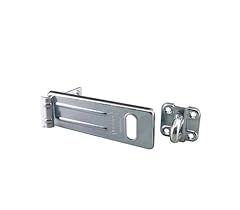
Master Lock 706D Heavy-Duty Security Hasp
Provides heavy-duty security hasp for roll up door latch with 7 inch length
Common repair issues and maintenance for roll up doors
The two most common repair issues with roll up doors are spring failure and latch malfunction. Springs provide the tension necessary to roll the door up and down smoothly.
If a spring breaks or loses tension, the door becomes hard or impossible to open. Latches can wear out or become misaligned, compromising security and ease of use.
Routine maintenance includes lubricating springs and tracks every 6-12 months and inspecting latches for wear or rust.
Ignoring maintenance can lead to costly repairs and may jeopardize the door’s operational reliability.
Another frequent issue arises from the accumulation of dirt and debris in the tracks, which can cause the door to jam or operate unevenly. Over time, this can wear down the rollers, leading to noisy operation or premature failure.
Weather conditions also contribute to wear: moisture can cause rust on metal components, especially in humid or coastal environments, while extreme cold can stiffen lubricants and make springs brittle. Regular inspections should include checking for corrosion and testing the door's smoothness in various weather conditions to catch problems early.
- Spring tension: check yearly and lubricate
- Latch alignment: inspect every 3-6 months
- Tracks: clear debris to prevent jamming
- Weather seals: replace if cracked to protect contents
Cost factors compared to swing doors
Roll up doors typically cost about the same as swing doors when installed in similarly sized storage units.
Material choices affect price: steel doors with insulated cores cost more than single-layer aluminum or galvanized steel.
Labor for roll up door installation can be more specialized, potentially raising upfront costs slightly, but the difference usually balances out in maintenance savings.
Swing doors require more clearance space and may incur additional framing or space preparation expenses if the area is tight.
| Feature | Roll up door | Swing door |
|---|---|---|
| Initial purchase price | Moderate | Moderate |
| Installation complexity | Specialized | Standard |
| Space needed to operate | Minimal | 3-6 feet at front |
| Maintenance frequency | Moderate | Low |
| Repair costs | Springs and latches | Hinges and locks |
Security implications of roll up doors
Roll up doors are secure when equipped with heavy-duty locks and reinforced metal slats. However, their moving parts and spring mechanisms can be a vulnerability if poorly maintained or cheaply made.
Swing doors typically allow more bolt or deadbolt lock options, sometimes making them inherently more secure.
Security cameras and alarms can compensate for physical vulnerabilities in roll up doors.
If security is a top priority, ensure your roll up door has hardened steel, tamper-resistant latches, and consider adding secondary locking mechanisms.
In addition to physical vulnerabilities, the design of roll up doors can sometimes allow small gaps when closed, which might be exploited by determined intruders using slim tools to manipulate the latch. Ensuring tight seals and reinforced edges can mitigate this risk.
Roll up doors with electronic locking systems integrated with facility-wide security can provide enhanced protection and remote monitoring capabilities. However, these systems may require backup power solutions to maintain security during outages, adding complexity to maintenance.
- Compact, durable design
- Locks integrate with door structure easily
- Springs can be tampered with
- Fewer lock options than swing doors
When to choose a storage unit with a roll up door
If your storage location has tight front clearance, a roll up door is usually the best choice because it requires no space for door swing.
Roll up doors offer easier access to large items as the full width of the unit opens unobstructed.
They are ideal for commercial storage, garages, and units where overhead clearance is available and security measures are in place.
Avoid roll up doors if overhead clearance is limited below 12 inches or if you require the highest level of locking security without additional reinforcements.
How to maintain and use roll up doors for long-term storage
Maintain your roll up door by cleaning tracks and lubricating springs with silicone spray every six months.
Inspect latches regularly for rust or bending and replace worn parts promptly to avoid malfunctions.
When storing fragile or awkward items behind a roll up door, stack boxes carefully since the door opens vertically, exposing the entire unit.
Use weatherstripping to reduce dust and moisture ingress, protecting your belongings from damage during long-term storage.
Using a soft brush or vacuum attachment to clean the tracks before lubrication helps prevent abrasive particles from damaging moving parts. Avoid oily lubricants that attract dust; instead, use dry silicone sprays recommended specifically for metal door components.
If the door develops a noticeable slack or sags when partially open, it often signals spring fatigue. Addressing this early by consulting a professional can prevent sudden failures and maintain smooth, safe operation over years of storage.
For long periods of non-use, such as seasonal storage, it's advisable to open and close the door monthly to prevent the springs and rollers from seizing up. This practice ensures the door remains functional and ready for access without sudden surprises.
- Clear debris from tracks monthly to prevent obstruction.
- Apply lubricant to springs and rollers twice yearly.
- Check latch function every 3 months and tighten or replace parts as needed.
- Seal edges and gaps with weatherstripping to maintain climate protection.
Roll up doors suit tight spaces well but need consistent upkeep and security reinforcement.
Questions people still ask
Can a roll up door be installed in very tight overhead spaces?
No, roll up doors require 12-18 inches of clearance above the door frame for the coiled door to fit. If this space is not available, a swing door or alternative is necessary.
Are roll up doors more expensive to maintain than swing doors?
Roll up doors require more frequent maintenance on springs and latches, which may increase upkeep costs, but their compact design can reduce installation and space preparation expenses.
Do roll up doors provide less security than swing doors?
They can be less secure if not maintained or reinforced, especially because springs and latches may be vulnerable. Adding tamper-resistant locks and alarms increases security substantially.
What happens if the roll up door spring breaks?
A broken spring makes lifting the door difficult or impossible. It must be replaced promptly by a professional to restore proper function and avoid injury or further damage.
Can I store large appliances behind a roll up door?
Yes, roll up doors provide full-width access, making it easier to move bulky items like appliances in and out without door swing obstruction.